The Heart of the Collective: A Cancer Stellium in the 11th House
Discover how emotional nurturing transforms friendships, community, and humanitarian vision with this powerful Cancer stellium placement in the house of groups and hopes.
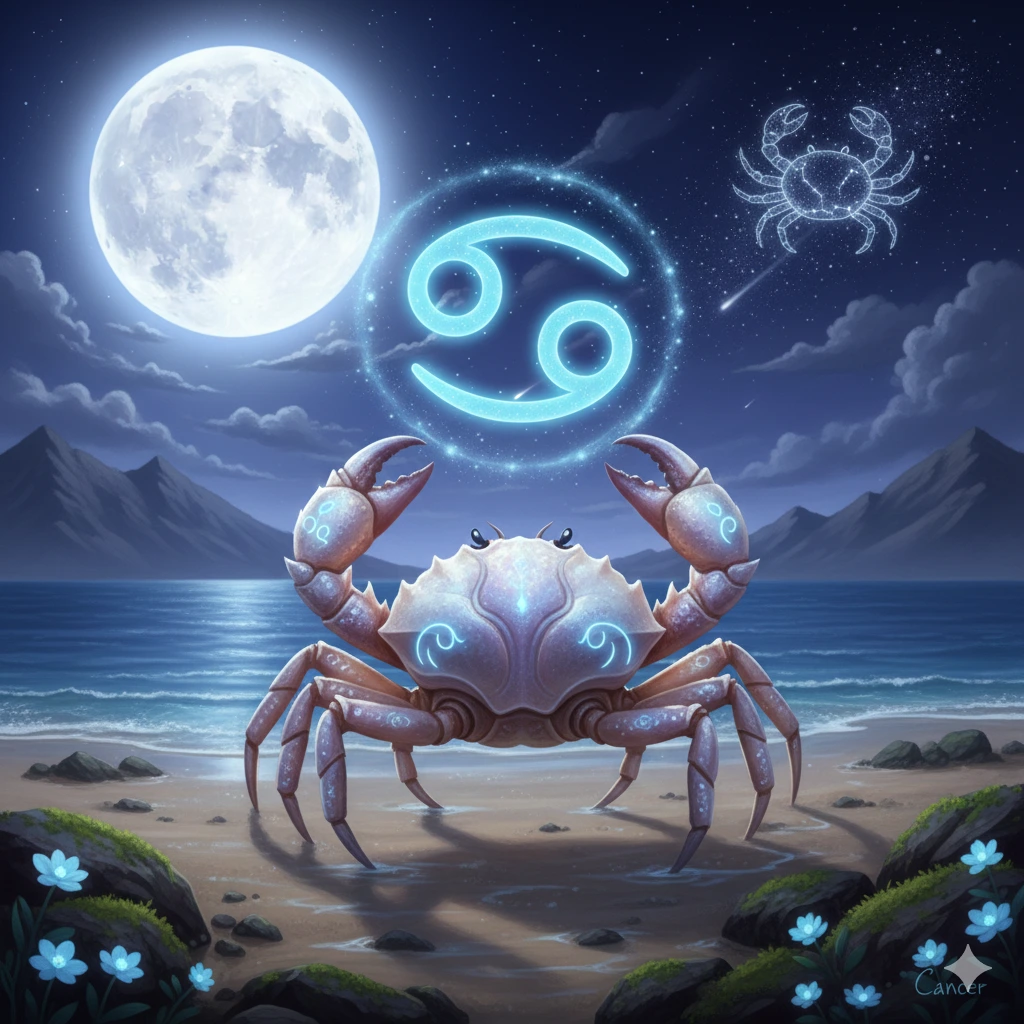
Discover how emotional nurturing transforms friendships, community, and humanitarian vision with this powerful Cancer stellium placement in the house of groups and hopes.
The Cancer constellation - bringing emotional nurturing to friendships, community, and collective vision
In the astrological framework, the 11th House represents friendships, groups, communities, hopes, wishes, and our vision for the future. It is the house of collective ideals and social networks. When a potent concentration of three or more planets, a stellium, resides in this house under the sign of Cancer, the nature of community is profoundly redefined.
This placement creates an individual for whom social circles are not mere acquaintanceships, but chosen family. Their hopes for the future are deeply emotional, and their contribution to the collective is one of nurturing, protection, and creating a sense of belonging. For them, the tribe must feel like a home, and the future must promise emotional security for all.
A Cancer stellium in the 11th House signifies that the involved planets express their energies through a Cancerian filter in the realms of friendship, community, and shared ideals. The central drive is to find emotional security, belonging, and a sense of "home" within groups, friendships, and forward-looking collective movements.
The crab's protective shell expands to encompass their entire social circle—they are the nurturer, the emotional glue, and the memory-keeper of their community. Their aspirations are not for personal glory, but for a future where everyone is cared for and community ties are strong. This placement often indicates that early family dynamics shape their understanding of friendship and community. You can read more about the astrological houses on Astro.com's detailed explanations.
They are the friend who remembers birthdays, hosts comforting gatherings, and intuitively knows when someone in the group is hurting. They don't just join groups; they create a familial atmosphere within them. Their friendships are deep, loyal, and enduring, often lasting a lifetime.
Their hopes for humanity are steeped in Cancerian values. They may be drawn to humanitarian causes focused on housing, food security, family welfare, or preserving cultural heritage. Their vision of a better future is one of increased emotional safety and stronger community bonds.
They are exquisitely sensitive to the emotional undercurrents within their groups. They can feel collective anxiety, excitement, or discord intuitively. This makes them excellent mediators, but it also means they can be easily overwhelmed by toxic group dynamics or emotional demands.
Their closest friends are not merely companions; they are soul kin. The bonds feel fated, deep, and familial. They often have long-standing friendships that have weathered many emotional cycles. The line between friend and family is beautifully, often intentionally, blurred.
Like the Moon, their involvement in groups and communities may wax and wane. They have periods of intense social nurturing and hosting, followed by necessary retreats into privacy to recharge their emotional batteries. Their social energy is cyclical, not constant.
Emotional over-extension within the group: Their nurturing instinct can lead to taking on the role of "group parent," bearing the emotional burdens of others to the point of burnout. They may struggle to say no or fear that setting boundaries will break the familial bond.
Cliquishness and excessive nostalgia: The Cancerian shadow can manifest as creating insular, exclusive groups that feel more like a fortress than an open community. They may resist new members or new ideas that threaten the familiar dynamic.
Taking group dynamics personally: If a friend drifts away or the group makes a decision they disagree with, it can feel like a familial rejection, triggering deep insecurities. They must learn to separate self-worth from group affiliation.
When consciously integrated, the gift of a Cancer stellium in the 11th House is the remarkable ability to build communities that heal. These individuals are the heart-centered activists, the creators of supportive networks, and the friends who teach us that chosen bonds can be as sacred as blood ties.
They demonstrate that true humanitarianism begins with empathy, that a strong society is built on the model of a healthy family, and that our highest hopes can be realized through the simple, powerful act of caring for each other. Their legacy is not in a crowd of followers, but in a tight-knit, deeply loved community that endures because it was built on the unshakeable foundation of emotional nurturance.
For a limited time, you can receive a free copy of 'The Astrologer's Guide: Mastering Birth Chart Interpretation' by subscribing to our newsletter. Get your free book here: https://hermesastrology.substack.com/p/your-free-book
Friendships are approached with the depth, loyalty, and emotional investment typically reserved for family. They are the nurturers in their friend group, often playing the role of the listener, advice-giver, and host. They seek friends who are emotionally trustworthy and with whom they can build a history. Large, superficial social networks are draining; they prefer a smaller, tighter circle of "soul family" where vulnerability is safe. Friends are often gathered around shared emotional experiences or nurturing activities (cooking clubs, book clubs, support groups).
They are drawn to groups with a strong sense of shared history, emotional purpose, or nurturing mission. This includes: Support groups (for parenting, grief, health), Historical or genealogical societies, Community service organizations focused on basic needs (food banks, shelters), Artistic communities that feel collaborative rather than competitive, Spiritual or religious communities that emphasize fellowship and care, and Any club that meets in homes or creates a familial atmosphere. They seek belonging, not just membership.
Yes, but their activism is emotionally-driven and care-focused. They are not typically abstract ideologues but are moved to action by direct human suffering, especially that which affects homes, families, and children. Their activism might focus on issues like affordable housing, maternal leave policies, refugee resettlement, or childhood hunger. They excel in roles that involve building community support structures, providing emotional aid, or preserving the cultural heritage of a threatened community. Their strength is in nurturing both the cause and the people fighting for it.
Managing this burden requires conscious role definition and energetic boundaries. They can: Clearly communicate their limits ("I can host monthly, but not weekly"); Rotate caregiving duties within the group; Practice discernment between supporting a friend and trying to "fix" them; Schedule regular alone time to disconnect from the group's emotional field; Remember that a healthy community is interdependent, not dependent on one person. Their goal should be to foster a group where *everyone* nurtures, not just themselves.
It can, but with a distinct Cancerian flavor. If engaged online, they are likely drawn to niche communities that feel like intimate, supportive families rather than vast platforms. They might be active in private Facebook groups centered on parenting, healing, or specific interests, where deep sharing and emotional support are the norms. They may use social media to maintain nostalgic connections with old friends or distant family. However, the often harsh, impersonal nature of broader social media can be particularly wounding to their sensitive 11th house, so they may limit their exposure or curate their online experience very carefully to ensure it feels like a safe, nurturing space. The concept of digital community is explored on Wikipedia's page on virtual communities.
A Cancer stellium in the 11th House represents a beautiful evolution of the family archetype—extending the nurturing impulse beyond bloodlines to encompass chosen kinship and collective care. These individuals are the keepers of the tribal hearth, the weavers of social bonds that feel like home, and the visionaries who imagine a future built on emotional security for all.
While they must navigate the challenges of boundaries and emotional overload, their ultimate gift is their capacity to transform groups into families and communities into sanctuaries. In a world that often values breadth over depth in social connections, they remind us that the most profound communities are those where we can be both seen and held, where friendship becomes family by choice, and where our collective dreams are rooted in the simple, revolutionary act of caring for one another.
